Our Services
Whether it is the clothes we wear, the art we appreciate, or the carpets we walk on, all of these stem from the same manufacturing processes. They can either provide comfort or are essential for survival. In fact, textiles are an important staple to culture all around the world and to existence in general.
In textile manufacturing, different types of fibers are used to produce yarn, but cotton is the most important natural fiber among them all. What needs to be noted here is that textiles are classified according to their component fibers into:
- Silk
- Wool
- Cotton
- Linen
They can also be classified according to their component synthetic fibers like:
- Rayon
- Nylon
- Polyesters
There are also some inorganic fibers, based on which your textiles can be classified. These are:
- Cloth of gold
- Glass fiber
- Asbestos cloth
Additionally, your textiles are classified further based on their:
- Structure or weave
- The manner in which weft and warp cross each other in the loom
The factors that will determine the value and quality of your textiles are:
- Quality of raw materials used.
- The character of the yarn spun from the fibers like clean, fine, smooth, and coarse. It also includes whether they are soft, hard, or medium twisted.
- Density of weave
- Finishing processes
What is the Process of Textile Manufacturing?
Understanding the whole process of textile manufacturing is the key to understanding as well as optimizing your business. This section of the article will take you through the textile manufacturing process. This process is as follows:
Source Fiber
The process of textile manufacturing begins with the cultivation of natural textile fibers. This means that the first step in the production of textiles is harvesting raw fiber and sourcing it.
Fibers are extracted from:
- Plant or
- Animal or
- Mineral sources
They are then processed into a continuous strand known as yarn.
There are many types of fibers like:
- Cotton
- Linen
- Wool
- Silk
And so on. Additionally, today, man-made or synthetic fibers are also used in textile manufacturing. These include but are not limited to the following:
- Polyester
- Rayon
- Nylon
Spinning or Yarn Manufacturing
Yarn manufacturing is the textile process of turning raw materials into yarn. To create the final yarn of thread, raw materials are sorted, cleaned, and then mixed together. This is used in weaving, knitting, or crocheting. Yarn can also be called a thread when it is used for sewing purposes.
Yarn manufacturing is known as the mother of the textile manufacturing process. Mainly, yarn is done by spinning together fibers such as cotton fiber, wool, or synthetic fibers. While originally, the yarn used to be made from animal hair, today, the same is not the case.
In fact, the market has many different types of yarn today. This is because textile manufacturers have found ways to make them out of other things like hemp, basalt, or bamboo. Yarn can also be made from recycled materials like plastic and polyethylene. In the case of synthetic yarn production, it is turned into petroleum-based products like rayon and polyesters.
While yarn manufacturing is a complex textile manufacturing process that takes place in different factories based on the type of yarn being created, the main theme of textile processing will always stay similar.
The first step in yarn manufacturing is raw material preparation. For this, raw materials must be sorted, cleaned, and mixed together to create the final textile product.
For example, if the raw material is wool or cotton, then you will have to ensure that any debris that might contaminate a batch is removed. If, however, your raw material is bamboo, then you will need to strip away its outer layer before spinning it into sewing thread for knitting projects.
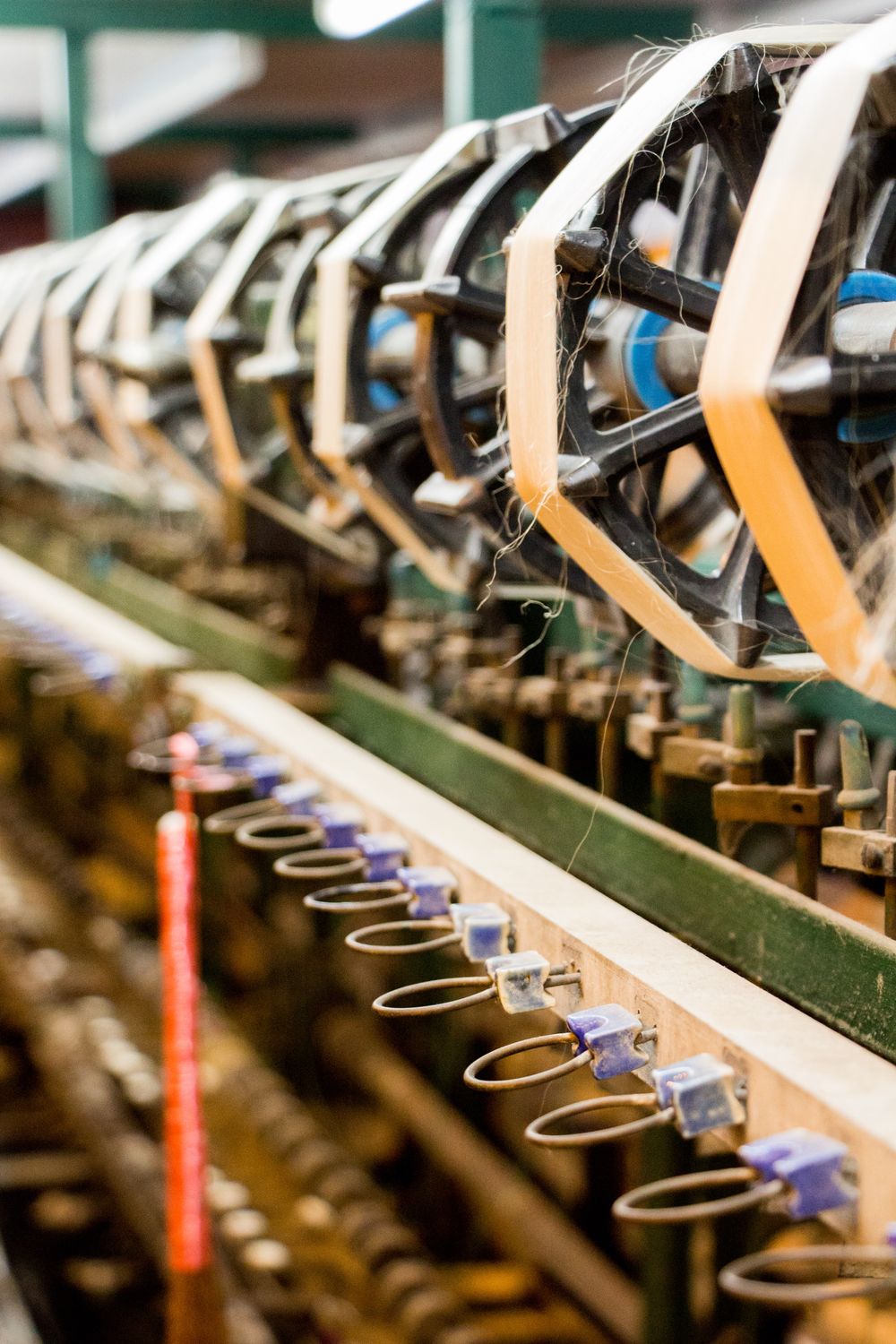
After the raw materials are prepared, they are spun into yarn through a process called spinning. Spinning is done using machines with steel bobbins that have been wound with fiber or spinning material, known as roving. This can come from natural sources such as wool or cotton.
The machine winds the roving around a bobbin and then pulls it between two rollers that turn at different speeds to create the yarn. Here, some machines can also “twist” in order to add strength and elasticity to the final product.
Fabric Manufacturing Process
Also known as weaving, the fabric manufacturing process is the next step in textile production. Here, yarn is taken from one machine and transferred to another machine in order to create a length of fabric.
This process is completed using machines that turn yarn into lengths, which are then fed onto a loom with different types of colors or threads on specific sections called harnesses.
The warp (lengths) must be fitted precisely between the two sides of the heddles before the loom is turned on and the weaving process begins. Once a length of textile fabric has been created, it is removed from the looms and then sewn together to create a finished product.
There are four types of fabrics that are produced in the garments industry. These are:
- Woven fabric
- Knit fabric
- Nonwoven fabric
- Braided fabric
Fabric Wet Processing
This is a process used to dye and finish textiles. The dyeing process involves the application of colorants to fabric in order for it to become colored. The wet preparatory processes are:
- Fabric inspection
- Stitching
- Desizing
- Scouring
- Bleaching
- Dyeing
- Printing
- Finishing
Textile finishing may involve adding additional properties such as soil release, anti-pill, or flame retardant treatments with different textile auxiliaries. This is applied chemically before packaging and shipping. What needs to be noted here is that there are several types of textile finishing that can be done by hand or machine.
Textile printing includes the use of inkjet printing on fabrics like sweatshirts, aprons, children’s clothes, t-shirts, etc. It also includes screen printing on various types of clothing, including hats, shirts, etc. Some of the types of textile printing are:
- Digital textile printing uses computers/plotters to print onto fabric
- Flexography which prints onto plastic film
- Gravure printing which prints with engraved cylinders onto paper
- Dye sublimation printing, where heat-activated chemicals are transferred onto a carrier medium from an inkjet printer
Garment Manufacturing Process
Garment manufacturing is the heart of yarn manufacturing. The steps involved in the garment manufacturing process are:
- Garments design- This could be provided by the buyer, or you will need textile design in the designing section. When garments are received from the buyer, their design starts with a technical sheet. This step can either be done manually, or it can be automated.
- Pattern making- Based on the garments' design, technical sheet, and artwork, the pattern master makes the pattern for all garments. Today, however, this can be done with an automated machine. Patterns are drawn, keeping in mind the different components of apparel by standard body measurements. They are often known as basic blocks or block patterns.
- Sample making- After the perfect pattern has been made, a complete apparel sample is made to ensure that it meets the requirements of your buyers. Once this sample is approved by the buyer as per their required specifications, it is known as an approved sample.
This will help in ensuring that the pattern adheres to the instructions issued for complete apparel production. This will help in saving your expenses while also keeping your customers satisfied.
- Production pattern making- The approved sample is followed by the counter sample, which is made for bulk production. Here, an additional extra measurement with exact or actual measurement is taken. This is known as an allowance, which is crucial for bulk production. Allowance can either be added manually or using the computer and is often known as a working pattern.
- Grading- Grading is the stepwise decrease or increase of the block or master pattern to produce different patterns and sizes. In bulk garments, production grading is important to maintain the production's size ratio. It is graded according to the buyer’s instructions.
- Marker making- A marker is a thin paper containing every apparel part. Marker-making helps to produce the cutting process smoothly. This step can be done manually as well as by using automation.
- Fabric spreading- This is one of the crucial parts of the garment production process. This is also known as fabric lying. This process is undertaken after a process named fabric relaxing is undertaken.
The main objective of fabric relaxation is to relax and contract the fabrics. This makes the fabric ready for the garment production process.
The benefit of this process is that it not only helps in preventing fabric strain at several stages but also helps in reducing fabric shrinkage. Post this, the fabric is spread on a long table so that it can be cut properly.
Currently, fabric spreading is done using automation. However, it still requires skilled manpower to spread the fabric properly. Thus, it is during the fabric spreading process that any fabric fault from the production line is detected.
- Fabric cutting- The fabrics need to be cut according to the marker. To do so, the process starts with fabric lying, marking, and then cutting. This is one of the most essential steps, as once the fabric is cut, there is no going back.
Hence, this can negatively affect your sewing process if not undertaken properly. This process can be done manually with a straight and sharp knife or through a computerized cutting system.
- Cutting parts sorting and bundling- After the errorless cutting, all the parts are sorted out according to the bundle tag. The bundle tag represents the fabric component bundle to identify the component. It is required to maximize production and maintain it. However, this step is not required in cases of single-garment production.
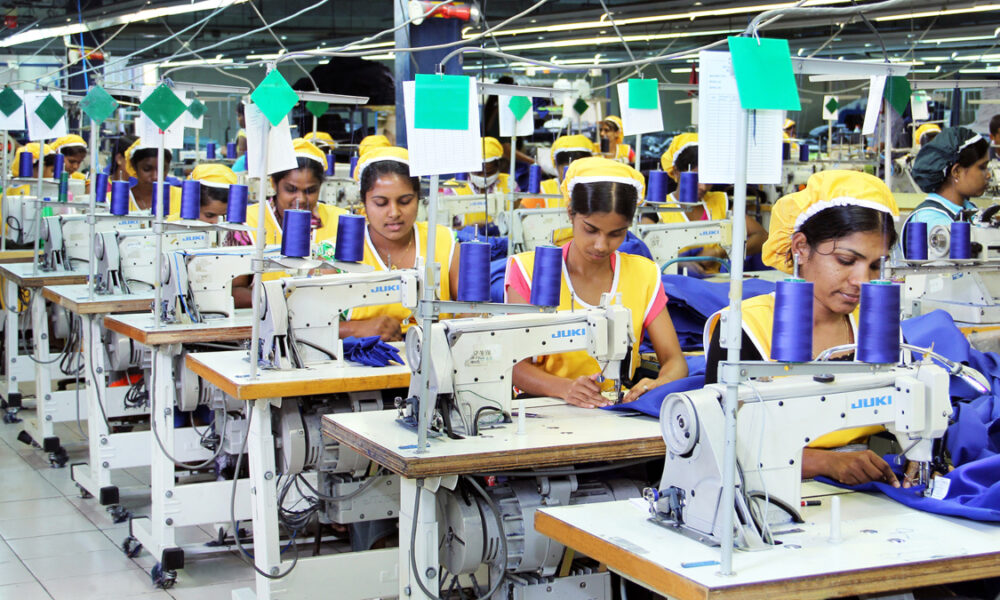
- Sewing- Here, all the cutting components of fabric are sewn together to make the garment or part of the garment as required. This is done manually and depends on the skills of the workers.
- Garments inspection- Final garment inspection is an important part of quality control. Higher the quality of your garment, the better your factory is represented. This step is undertaken manually.
Often, garment factories set a commodity standard to measure production output. Quality control is the most complicated section where the quality of your garments will be defined based on the inspection.
- Spot removing, ironing, and finishing- This step happens after the production defects are identified in the quality control, and marked with a sticker. The garments are now taken to the spot cleaning area. Here, your apparels will be cleaned with the help of hot water, steam, or chemical stain remover. Then it goes for manual ironing and finishing.
- Final inspection- A final quality control check is done to ensure that your buyer’s requirements are met. Sometimes this is also done by the agents of your buyer. This step is always carried out manually.
- Garments packing- Once all the above-mentioned steps are completed, your garments will be packed. The packing is carried out by using the buyer’s instructed poly bag. This step can be done either manually or it can be automated.
- Cartooning and shipment- Once your garments are packed, they are cartooned to reduce the damage of the garments. This is done in accordance with the buyer’s instructions. Post cartooning, shipment starts.
Different Types of Textile Production
Textile production is the process of interweaving fibers to form a more complex pattern or object. Currently, there are at least six forms of textile production. These include:
- Weaving
- Knitting
- Braiding
- Felting
- Bonding
- Spread tow
In these crafts, hundreds of separate materials are used. These are categorized into the following four main groups:
- Anima; textiles
- Plant textiles
- Mineral textiles
- Synthetic textiles
Weaving
This is a textile manufacturing method that interlaces long strands of cloth in both horizontal and vertical patterns. For this textile production, a device called a loom is incorporated. With the loom, hundreds of different patterns are made possible.
The several examples of woven items range from bed sheets to bulletproof vests and thousands of creations in between.
Knitting
Traditionally, knitting is a type of textile production that is completed by hand with a needle or a crochet hook. Today though, industries have incorporated large knitting machines.
Crocheting is another type of textile manufacturing that would fall under this category. In fact, there are several types of clothing that are produced from knitting, using a variety of materials.
Braiding
This is a form of textile production in which two similar fabrics are taken and then twisted into knots by using a predefined pattern.
Normally, a braided material has a much greater overall strength if made correctly. This is why numerous types of ropes are created this way.
Knotting is a similar process that falls under the same category of textile manufacturing. In knotting, though, the shapes that are created are often not uniform.
Felting
This is a type of textile production that varies vastly from other processes discussed above. In this method, nothing is being interlaced together physically.
Instead, various components are forced together under large amounts of pressure. They are then twisted together so that they become entangled.
To prevent them from tearing or breaking during the process, these fibers are normally treated with some type of lubricant, like a detergent.
Bonding
This is a term that is almost exclusively applicable to synthetic materials like polyester or nylon. It is that type of textile production where these synthetic components are connected by means of pressure, heat, or adhesive.
Spread Tow
This method of textile production is similar to weaving. This is because, in this method, small, lightweight components are made into a tape and then woven together with similar pieces.